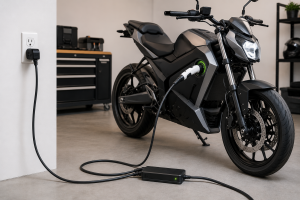

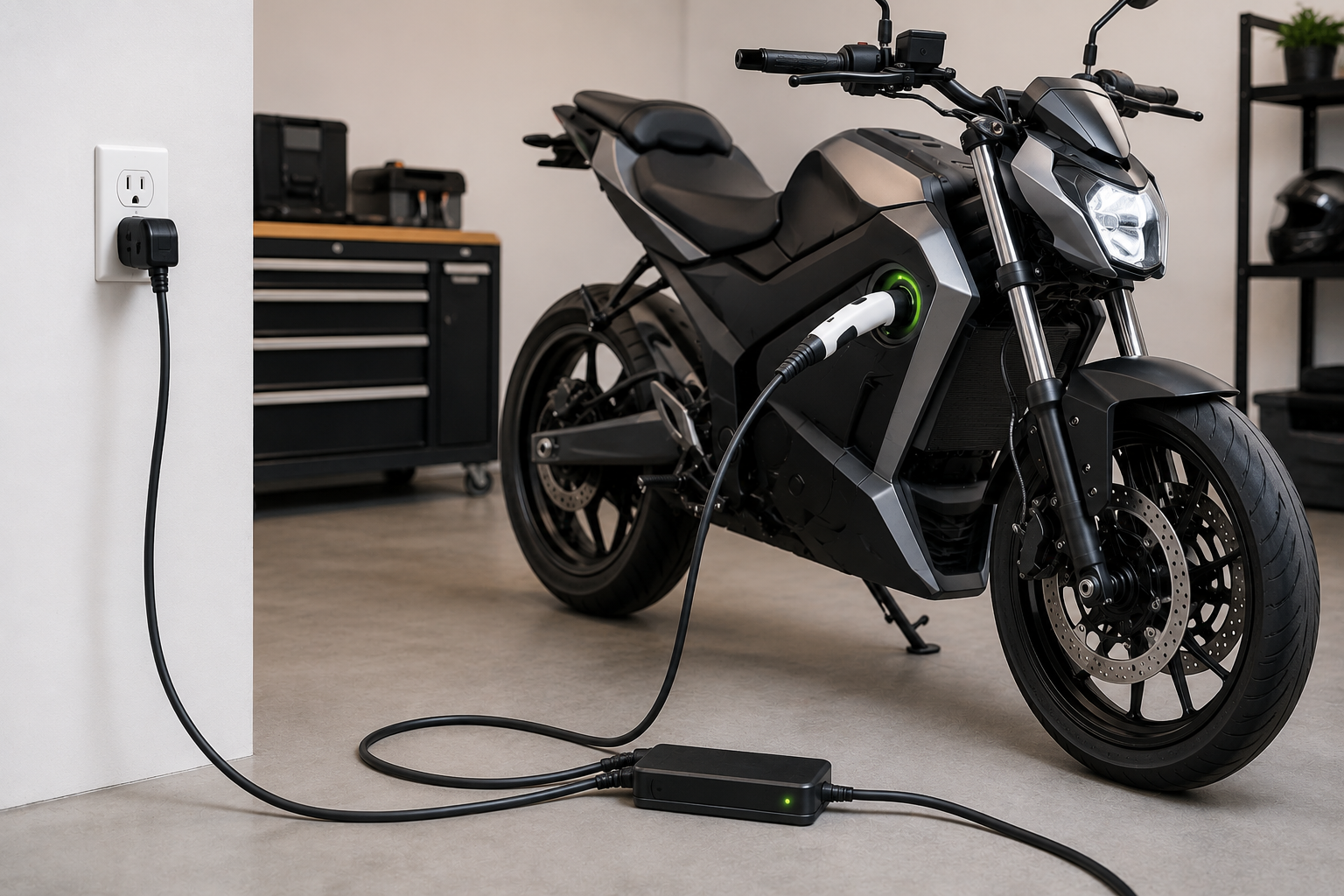
To charge an electric motorcycle, park it safely, switch it off, plug the approved charging cable into the bike, then connect it to a suitable home socket, wall charger, or public charging point. Most riders charge overnight at home for convenience. Always use the manufacturer-approved charger, keep the charging port dry, and avoid regularly draining the battery to 0% because, apparently, batteries also hate being pushed to the brink.
Electric motorcycles are becoming an increasingly common sight on UK roads. Rising fuel prices, lower running costs, quieter journeys and growing environmental awareness have encouraged more riders to consider switching from petrol-powered bikes to electric alternatives.
One of the first questions new riders ask is: How do you charge an electric motorcycle?
Fortunately, charging an electric motorcycle is much simpler than many people expect. Most riders charge their bike at home overnight, while others use the UK’s growing network of public charging stations when travelling further afield.
Whether you’re considering buying your first electric motorcycle or you’ve recently become an owner, understanding the correct charging methods can help maximise battery life, reduce costs and keep your motorcycle performing at its best.
This guide explains everything UK riders need to know, from charging methods and battery care to UK regulations and practical ownership advice.
Charging an electric motorcycle simply means replenishing the battery using electricity rather than filling a fuel tank with petrol.
Instead of an engine powered by combustion, electric motorcycles use rechargeable lithium-ion batteries that store electrical energy. When connected to a suitable charger, electricity flows into the battery until it reaches its recommended charge level.
The charging process is managed by the motorcycle’s battery management system (BMS), which monitors battery temperature, voltage and charging speed to help protect the battery.
Although every manufacturer has slightly different charging recommendations, the basic process remains very similar across most models.
Charging an electric motorcycle usually involves four straightforward steps.
Park your motorcycle on a flat, dry surface.
Avoid charging in standing water or where charging cables could become damaged or create a trip hazard.
Turn off the motorcycle completely before connecting the charger.
Some models will not begin charging unless the ignition is switched off.
Plug the charger into:
Then connect the charging cable to the motorcycle.
Many electric motorcycles include an indicator light or dashboard display showing charging progress.
Charging time depends on:
Once fully charged, disconnect the charger before storing the cable safely.
Not every rider charges in the same way. Fortunately, there are several options available.
Home charging is the most popular method in the UK.
Most riders simply charge overnight using their supplied charger.
Advantages include:
Some manufacturers recommend installing a dedicated charging point.
Benefits include:
The UK’s charging infrastructure continues to expand.
Public charging is useful for:
Always check that the charging connector matches your motorcycle.
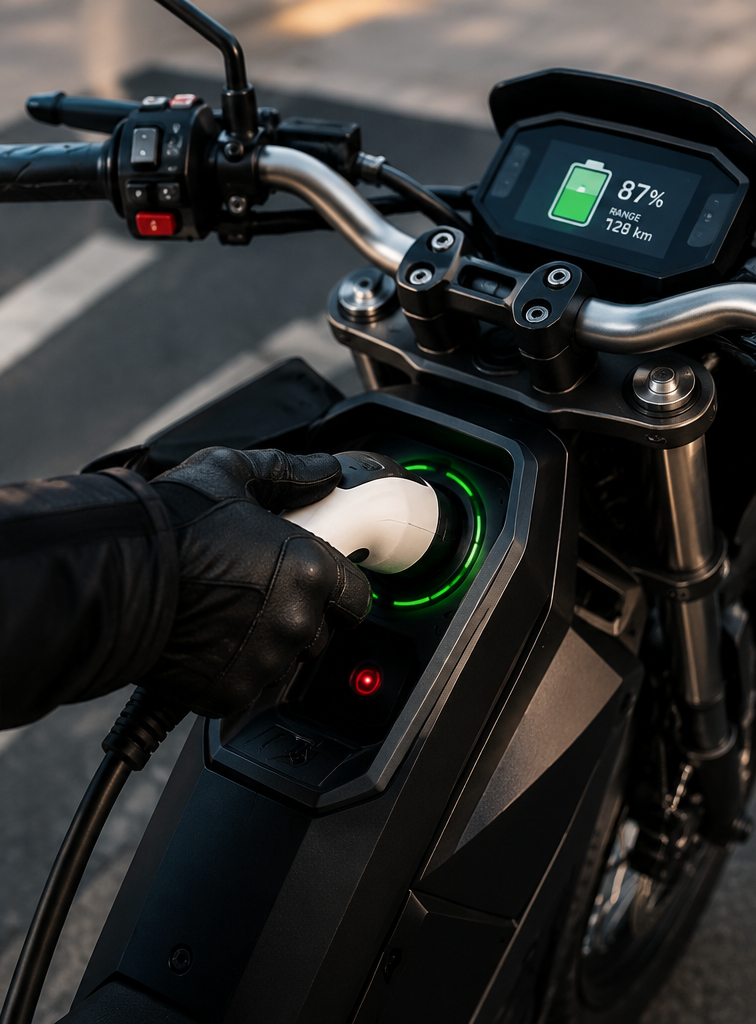
Charging times vary significantly.
Typical factors include:
Many electric motorcycles can fully recharge overnight using a domestic charger, while rapid charging can significantly reduce waiting times if supported by both the motorcycle and charging station.
Charging an electric motorcycle offers several practical advantages.
Electricity generally costs less than petrol for the same distance travelled.
For commuters, these savings can become noticeable over time.
Charging at home means many riders begin every morning with a full battery.
No more stopping at petrol stations before work.
Electric motorcycles contain fewer moving parts than petrol bikes.
There are:
Electric motorcycles produce far less noise, making urban riding more pleasant.
Electric motorcycles produce no tailpipe emissions while riding.
When charged using renewable electricity, their environmental impact can be even lower.
Choosing the right motorcycle involves more than just battery size.
Consider:
Larger batteries generally provide longer range but increase purchase price and weight.
Some motorcycles support rapid charging, while others only use standard charging.
Think realistically about your daily journeys.
Urban commuters often need less range than weekend touring riders.
Some models allow the battery to be removed for indoor charging.
This is particularly useful for flat dwellers.
Ensure your chosen motorcycle supports commonly available UK charging connectors.
Charging costs depend on:
Home charging is usually cheaper than public rapid charging.
Many riders reduce costs further by charging during off-peak electricity hours if they have a time-of-use tariff.
Electric motorcycles used on public roads must comply with UK regulations.
These include:
The licence required depends on:
Some riders may require Compulsory Basic Training (CBT), while others need an A1, A2 or full Category A motorcycle licence.
Electric motorcycles require valid insurance when ridden on public roads.
Electric motorcycles require an MOT once they reach the appropriate age, just like petrol motorcycles.
Vehicle Excise Duty rules depend on the motorcycle category and current UK legislation.
Always check the latest government guidance before purchasing.
Proper battery care helps maximise lifespan.
Many manufacturers recommend charging to around 80-90% for everyday riding unless maximum range is needed.
Deep discharges may increase battery wear over time.
Avoid prolonged exposure to extreme heat.
If storing the motorcycle for several weeks:
Always use chargers approved by the motorcycle manufacturer.
Cheap third-party chargers may damage the battery.
Avoid these common errors.
Every battery system is slightly different.
Inspect cables regularly for wear.
Keep charging ports clean and dry.
Allow the battery to cool first if recommended.
Rapid charging is convenient but constant use may increase battery wear over many years.
When buying your first electric motorcycle, think beyond the purchase price.
Consider:
Test riding different models can also help you decide which riding position, weight and handling suit your needs.
If you’re exploring different electric mobility options, brands such as Moto e Bikes also help raise awareness of practical electric transport solutions for everyday riders.
To get the best ownership experience:
Small habits like these can make ownership easier and help maintain performance.
Learning how do you charge an electric motorcycle is one of the easiest parts of electric motorcycle ownership. Once you’ve done it a few times, the process becomes as routine as plugging in your mobile phone.
Most riders simply charge at home overnight, giving them a fully charged motorcycle ready for the next day. Combined with lower running costs, reduced maintenance and an expanding UK charging network, electric motorcycles offer an increasingly practical solution for commuting and leisure riding alike.
By following good motorcycle charging habits, using approved equipment and maintaining the battery correctly, you can enjoy reliable performance for years to come. As electric transport continues to grow across the UK, understanding proper motorcycle charging will help you get the very best from your investment while riding confidently into a more sustainable future.